


 Back to news
Budget 2025
Income Tax
The Chancellor kept the Labour manifesto pledge not to raise the rate of income tax, National Insurance or VAT; however, the freeze on income tax thresholds has been extended for a further 3 years to April 2031.
While freezing income tax thresholds may not appear to be a change, as wages rise over time, frozen thresholds mean more people are pulled into higher income tax brackets without any formal rate increase (known as fiscal drag). This would also impact how much capital gains tax, savings tax and dividend tax is charged for people who inadvertently move into higher income tax brackets.
It could also mean many people who only receive a State Pension could end up becoming taxpayers, as the amount received could end up being higher than the personal allowance. Since this can’t be collected via PAYE (due to the pension being paid gross), these individuals could get a tax demand.
As a reminder, the income tax rates and thresholds for the 2025/26 tax year in England, Wales and Northern Ireland are:
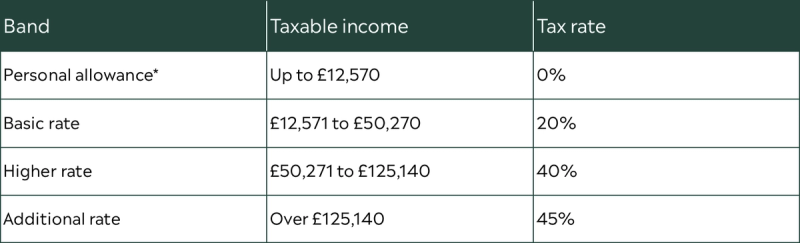
*Your Personal Allowance may be greater than £12,570 if you claim Marriage Allowance or you are eligible for the Blind Person’s Allowance. Those earning more than £100,000 will see their Personal Allowance reduced by £1 for every £2 earned over £100,000 and is zero if your income is £125,140 or above.
2025/26 Income tax rates for Scotland
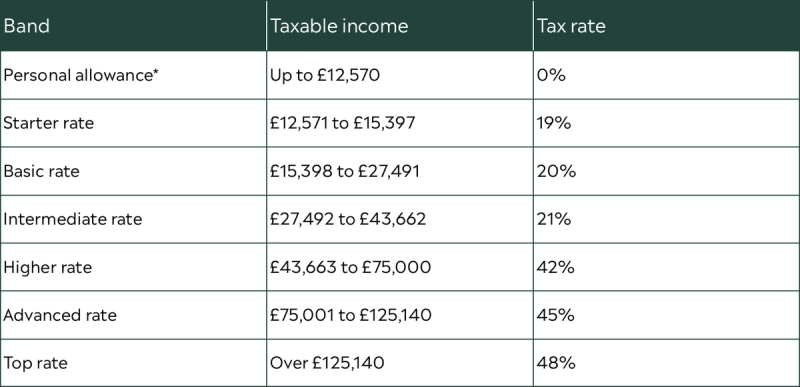
*As with the rest of the UK, those earning more than £100,000 will see their Personal Allowance reduced by £1 for every £2 earned over £100,000 and is zero if your income is £125,140 or above.
Savings Income
The government is changing the rates of income tax applicable to savings income. From 2027-28, the savings rates will increase by 2%:
- Basic rate - 22%
- Higher rate - 42%
- Additional rate - 47%
ISAs
The Chancellor has today announced that the Cash ISA limit will be reduced to £12,000 for those aged under 65 from April 2027.The Chancellor referenced differences in longer-term historical returns from Cash ISAs and Stocks & Shares, with the intention being to incentivise savers to invest. Over 65s will retain the ability to contribute the full £20,000 towards a Cash ISA.
Other ISA allowances remain unchanged:
- Stocks and Shares ISA - £20,000
- Junior ISA - £9,000
- Lifetime ISA* - £4,000 (excluding government bonus)
- Child Trust Fund - £9,000
*The government will publish a consultation in early 2026 on the implementation of a new, simpler ISA product to support first time buyers to buy a home. Once available, this new product will be offered in place of the Lifetime ISA.
Dividends
From April 2026, the basic and higher dividend tax rates will increase by 2%:
- Basic rate – 10.75%
- Higher rate – 35.75%
- Additional rate – 39.35% (unchanged)
The dividend allowance of £500 will also remain unchanged.
Pensions
It was announced that salary-sacrificed pension contributions will be capped at £2,000 from 2029. This means that employees who contribute up to £2,000 into their pension each year via salary sacrifice can continue to benefit from pension contributions that are free of income tax and national insurance. Contributions over £2,000 will result in employee and employer National Insurance charges on the amount above £2,000.
The Annual Allowance for pension contributions remains unchanged at £60,000, and there has been no change in the rate of income tax relief applicable.
The standard pension Lump Sum Allowance remains at £268,275.
Inheritance Tax (IHT)
The government proposed changes to the way pensions are treated for inheritance tax purposes in the last Budget, which is still at consultation stage. In short, from 6 April 2027, some pensions will count as part of a person’s estate when they die, which may increase the amount of IHT due.
In addition, the Chancellor announced inheritance tax thresholds will remain at their current levels until 2031. Keeping these thresholds unchanged could impact many people as more families find themselves liable for IHT due to rising property and asset values.
High Value Council Tax Surcharge
The Government has announced the introduction of a new high-value council tax surcharge. From April 2028, owners of properties identified as being valued at over £2 million by the Valuation Office (in 2026 prices) will be liable for a recurring annual charge, which will be additional to existing council tax liability.
The new charges will start at £2,500 per year for properties valued between £2 million and £2.5 million, rising to £7,500 per year for properties valued above £5 million, and will be levied on property owners rather than occupiers.
Property income
The government will create separate tax rates for property income. From 2027-28, the tax rates on income from property will be:
- Basic rate - 22%,
- Higher rate - 42%
- Additional rate - 47%
These rates will apply across England, Wales and Northern Ireland.
Capital Gains Tax (CGT)
The Annual Exempt Amount for capital gains tax remains unchanged at £3,000, and the tax rates applicable also remain unchanged at 18% and 24% for basic and higher rate taxpayers respectively.


